Only 13 percent of US land and waters are currently protected—well short of the Interior Department’s 30 percent by 2030 goal. Because existing conservation lands are highly fragmented, what we do in our own yards and gardens directly impacts the survival of local plants and wildlife.
Here are five ways to transform your property into a vital habitat corridor:
Remove Invasive Species
Invasive plants outcompete native flora, drastically reducing habitat health and biodiversity. Many common invaders originally escaped from residential gardens, spread by wind, mowing, and wildlife.
- Action: Audit your property for problematic species and eliminate them.
- Tip: Use smartphone apps like SEEK by iNaturalist for fast, accurate plant identification.
Go Native
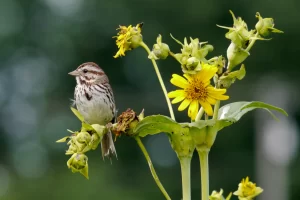
Native plants are perfectly adapted to local soil and climate conditions, eliminating the need for heavy watering or chemical fertilizers. They also share a critical, co-dependent relationship with native pollinators.
- Action: Replace introduced ornamentals with regional native plants to establish essential wildlife corridors.
- Resource: Midwestern native plant nurseries offer extensive site-specific selection guides.
Lawns: Less is More
Traditional lawn grass is a non-native monoculture that offers zero support to diverse animal communities while demanding significant water, fertilizer, fossil fuels, and labor.
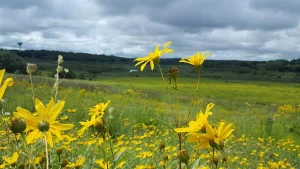
- Action: Shrink your turf footprint and replace it with a Pocket Prairie—a small, manageable patch of diverse native pollinator plants that you can expand over time.
Adopt a Garden
You don’t need to own a backyard to make an ecological impact.
- Action: If you live in an apartment or condo, check with your municipality about adopting a street median, traffic circle, or city park flower bed for a native “pocket prairie” makeover.
Install Rain Gardens
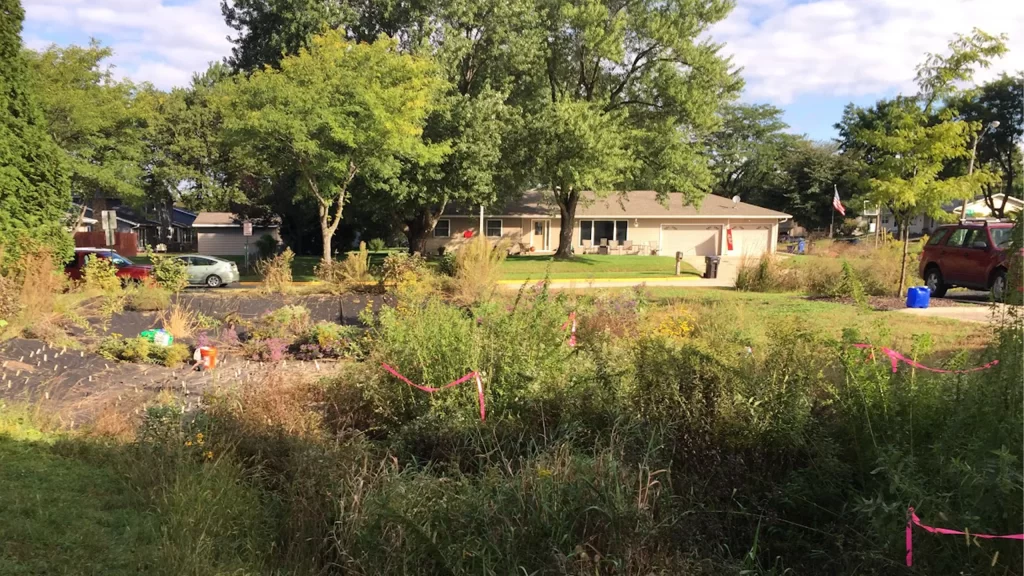
Rain gardens are shallow depressions planted with native species that catch stormwater runoff from downspouts and driveways. This allows water to filter naturally into the ground instead of washing pollutants into local lakes.
- Action: Advocate for rain gardens in your neighborhood, especially if street reconstruction is planned. Check out Ripple Effects for design ideas.
True conservation can’t stop at the park boundary. By rethinking our lawns, we turn isolated green spaces into connected, resilient ecosystems.
Related Articles
The Benefits of Using Native Plants & Rain Gardens
Two recent workshops showed residents how rain gardens and “going native” with plantings can help their yards and the community.
Learn More →
Update on the Eagle’s Nest (October 2025)
Here’s what’s happening with the bald eagle pair that has called the Conservancy home for the last several years.
Learn More →
Building Neighborhoods: Looking for a Place to Nest
Learn about the steps the Friends take to attract migrating grassland birds like bobolinks and meadowlarks to the Conservancy.
Learn More →